management dilemma

The Managerial Dilemma in the Age of Generative AI: Efficiency vs. Fairness

Managerial Dilemma in the Age – The Context & Problem

The Scenario: In a modern office, there are two employees with the same title and salary.

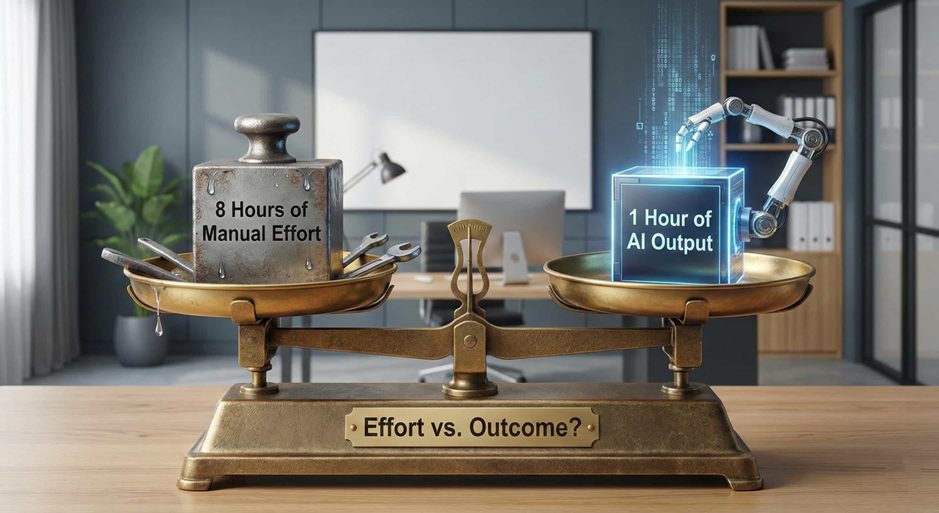
  • Employee A (Manual): Completes tasks purely through manual effort and personal knowledge in 8 hours.
  • Employee B (AI-Assisted): Completes the same tasks in 1 hour using tools like ChatGPT or Claude but hides this fact from management (“Shadow AI” usage).

Author: Aykut Akbulut, Erasmus students 2025

The Management Issue: Traditional management focuses on “time spent” (Input), whereas the AI era forces a focus on “value created” (Output). This discrepancy creates a perception of “Unfair Competition” and “Wage Inequity” within the office. Should the manager reward the 1-hour worker, or punish them with more workload? Managerial Dilemma.
Managerial Dilemma


Research Findings & Risk Analysis

Our literature review and industry analysis highlight three critical risks:

  1. Shadow AI Risk: Approximately 68% of employees (referencing industry trends) use AI without their manager’s knowledge. This poses a significant risk of Data Privacy Leakage.
  2. Skill Atrophy: Employee B, who constantly relies on AI, risks losing fundamental problem-solving skills and failing to detect AI-generated errors (Hallucinations).
  3. Burnout: Employee A may lose motivation, feeling that “I am working hard while they are taking it easy,” leading to a toxic work environment.
workflow loop

The Solution – The “Middle Ground” Strategy

Banning AI is not the solution; leveling the playing field is. The proposed management model is:

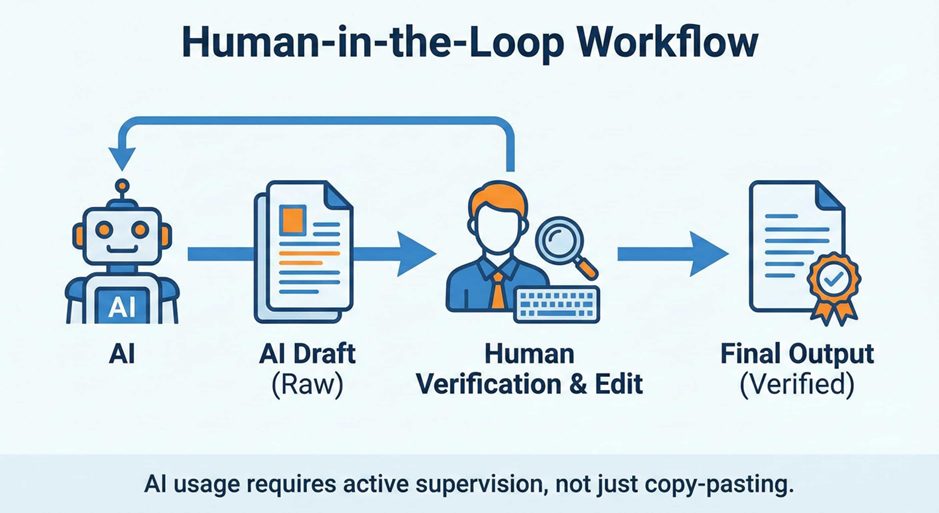
  1. Disclosure Policy: The company should allow AI usage but mandate “disclosure.” Employee B must be able to say, “I drafted this with AI support and verified the data.”
  2. Upskilling (Equalization): Employee A (the slower worker) should not be penalized but trained in AI usage. The goal is to bring Employee A down to 1 hour as well.
  3. Shift in Performance Metrics: Evaluation should shift from “hours sat at the desk” to “value added on top of AI.” The efficient worker should not be punished with busy work but encouraged to use the remaining time for strategic thinking. Managerial Dilemma.

management dilemmas

Managerial Dilemma. https://study.com/academy/lesson/dilemma-management-definition-example.html

Management Style: How Managers Really Manage

Similar Posts

  • |

    Customer Experience Management in the Digital Age

    Customer Experience Management CXM is a critical driver of growth and profitability. As technology continues to transform how companies interact with their customers, the role of CXM has become more complex and vital than ever. This blog post explores the key concepts, strategies, and tools involved in managing Customer Experience CX in the digital age,…

  • Authenticity in Influencer Marketing: Why It Matters and How to Achieve It

    The Authenticity Imperative in Influencer Marketing Influencer marketing has become one of the most powerful tools in digital advertising, driving billions in brand collaborations worldwide. Yet, as the industry matures, a critical challenge has emerged: authenticity. Consumers increasingly demand genuine connections, while brands often prioritize reach and engagement metrics. This tension creates a paradox—how can…

  • ERASMUS: An experience to Lublin and Bari

    Bari, a historic port city of the Adriatic coast of southern Italy, in the region of Puglia. It serves as both the capital of the province of Bari and a major cultural and economic hub for the area. Known for its rich history, Bari is a blend of ancient architecture, charming old streets, and a…

  • Management Style: How Managers Really Manage

    Management style: the desk-thumping dictator, the benevolent visionary, or the aloof delegator. We often reduce the complex reality of leadership into convenient caricatures. However, a rigorous examination of management style typology reveals a far more nuanced picture. For leaders, HR professionals, and students of business psychology, understanding these frameworks isn’t just academic—it is a diagnostic…

  • 3-Factor Model

    3-Factor model of consumer responses, attitudes & behavior. The key layers comprise: perception, cognition & responses. Layer 1: perception of consumers and employees Layer 2: cognitive, impulses and flows, experienced and reverse reflective behaviour/backward induction and deductive reasoning behind the past Layer 3: responses, outcomes from motivation, future projections and prospecting Consumers are more satisfied…

  • Online behavioral advertising

    Online behavioral advertising (OBA) is a configuration of online advertising that allows advertisers to target consumers with advertisements personalized based on their behavioral data Keywords: online advertising, digital platforms, behavioral personalization, targeted advertising, artificial intelligence, digital market Read about customer RFM segmentation OBA paradigm, a pattern or model OBA is the online phenomenon that entails…