Authenticity in Influencer Marketing: Why It Matters and How to Achieve It
The Authenticity Imperative in Influencer Marketing
Influencer marketing has become one of the most powerful tools in digital advertising, driving billions in brand collaborations worldwide. Yet, as the industry matures, a critical challenge has emerged: authenticity. Consumers increasingly demand genuine connections, while brands often prioritize reach and engagement metrics. This tension creates a paradox—how can influencers remain authentic while monetizing their content?
Recent research published in the Journal of Marketing (Duffek et al., 2025) explores this issue in depth, offering actionable insights for influencers, brands, and agencies. This blog post breaks down the theoretical foundations, key findings, and practical strategies from the study, helping you understand why authenticity is central to influencer marketing success.
What Does Authenticity Mean?
Authenticity in influencer marketing is not a simple trait—it’s a multidimensional construct shaped by relationships among influencers, brands, and audiences. The study draws on assemblage theory, which views influencer-brand-consumer interactions as dynamic systems rather than static roles. Authenticity emerges from these interactions, not just from an influencer’s personality. See also: What drives people purchase online
The English term “assemblage” captures the result of combining parts. The original French term “agencement”, refers both to the act of arranging and its outcome.
The simplest definition describes an assemblage as a heterogeneous multiplicity that creates relations among its parts. These relations are not genealogical but alliances, emphasizing external connections rather than identity-defining ones. This distinction introduces the notions of intrinsic vs. extrinsic relations.
Intrinsic relations define identity, e.g., family roles, while extrinsic relations connect heterogeneous elements without fusing them into a homogeneous whole, e.g., symbiosis in ecology. Intrinsic relations are coded and arbitrary, whereas extrinsic relations allow diversity and contingency.
In this context, contingency means that the relations are not necessary or predetermined—they happen by circumstance rather than by fixed rules or codes. So, when we say extrinsic relations allow diversity and contingency, we mean:
- They connect heterogeneous elements in ways that are open-ended and flexible,
- The connection is context-dependent and could have been otherwise,
- There is no rigid structure or essential identity forcing the relation
- It’s optional, situational, and variable.
Ultimately, assemblages operate through alliances and exteriority.
Core Dimensions of Authenticity
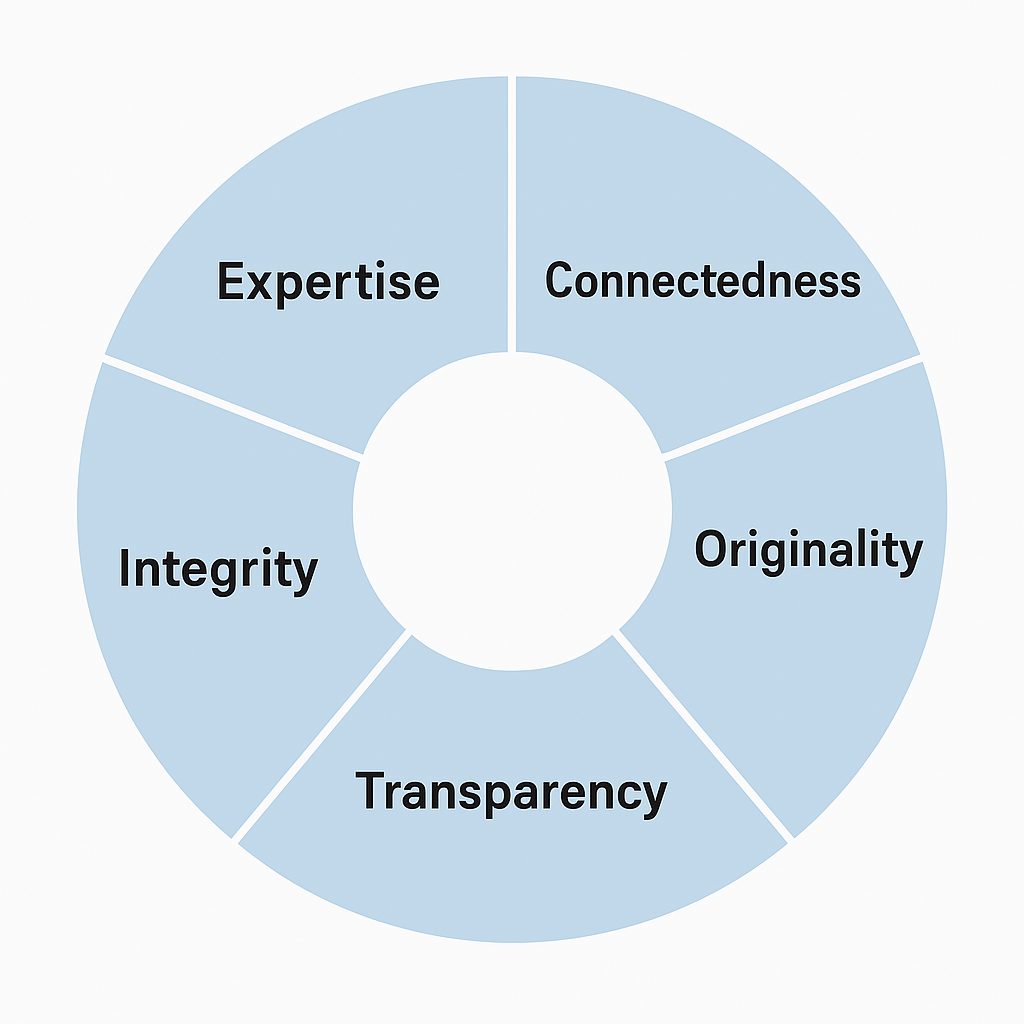
According to the research and supporting literature, authenticity in influencer marketing involves five key properties:
- Expertise – Demonstrating knowledge and experience in a niche.
- Connectedness – Building emotional bonds through genuine engagement.
- Originality – Crafting unique, creative content that reflects personal style.
- Transparency – Disclosing partnerships and being open about content creation processes.
- Integrity – Showing passion-driven motivation rather than purely financial incentives. [provost.gsu.edu]
These dimensions align with broader theories like Source Credibility Model and Uses and Gratification Theory, which emphasize trustworthiness and audience satisfaction as drivers of persuasive communication. [lup.lub.lu.se]
Why Authenticity Matters in Influencer Marketing
The demand for authenticity is not just anecdotal—it’s backed by data. Studies show that 88% of consumers want influencers to be authentic, yet nearly 50% perceive influencers as inauthentic. This gap erodes trust and reduces campaign effectiveness. [journals.sagepub.com]
Authenticity impacts:
- Consumer trust → Higher engagement and conversion rates.
- Brand equity → Authentic partnerships enhance brand credibility.
- Influencer longevity → Authentic influencers maintain loyal communities.
Key Findings from the Research
The Journal of Marketing study conducted 185 in-depth interviews with consumers, influencers, brand managers, and agency leaders. Here are the most relevant insights:
1. Authenticity Is Relational, Not Static
Authenticity is co-created through ongoing interactions. It’s not enough for influencers to “appear real”; brands must allow creative freedom and avoid rigid scripting. When influencers can express their unique voice, engagement and perceived authenticity rise significantly. [provost.gsu.edu]
2. Transparency and Trust
Transparency about technology fosters credibility and aligns with consumer expectations for honesty. [phys.org]
3. Misalignment Among Stakeholders
Consumers, influencers, and brands often prioritize different aspects of authenticity. For example:
- Consumers value emotional connection and honesty.
- Brands focus on professionalism and brand safety.
- Agencies seek scalable processes and compliance.
Resolving these misalignments requires clear communication and shared guidelines. [journals.sagepub.com]
4. Generational Differences
Gen Z views influencers as “educated friends,” while Millennials see them as professionals who must act ethically. This affects how authenticity is perceived and should inform campaign strategies. [degruyterbrill.com]
Practical Strategies for Building Authenticity
Based on the findings, here are actionable steps for influencers and brands:
For Influencers
- Stay true to your niche: Consistency in topic and tone builds expertise.
- Engage meaningfully: Respond to comments, share personal stories.
- Disclose partnerships: Transparency is non-negotiable.
- Balance creativity and brand guidelines: Negotiate freedom in collaborations.
For Brands
- Choose values-aligned influencers: Beyond follower count, look for shared mission.
- Avoid over-scripted campaigns: Authenticity thrives on creative autonomy.
- Support long-term partnerships: Sustained relationships feel more genuine to audiences.
Authenticity Dimensions Chart
Here’s a simple chart illustrating the five dimensions of authenticity:
Authenticity Is the Future of Influencer Marketing
Authenticity is not a buzzword—it’s the foundation of sustainable influencer marketing. As consumers demand transparency and genuine engagement, brands and influencers must collaborate to create content that resonates on a human level. By embracing the principles outlined in this research, you can build campaigns that not only perform but also foster trust and loyalty.