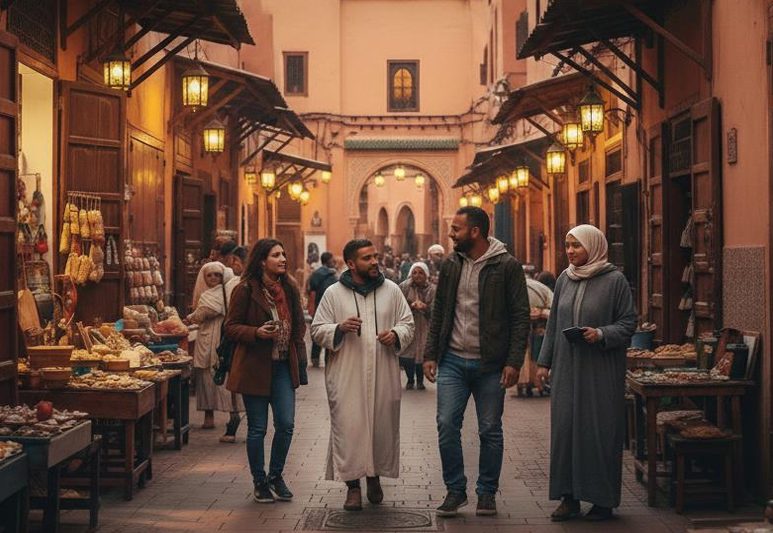
Customer Experience as an Entrepreneurial Trajectory: What Tourism Innovation Really Reveals?
Tourism Innovation. This essay emerges at the intersection of two intellectual journeys: my doctoral research on entrepreneurial trajectories and innovation in the tourism sector in the Marrakech–Safi region of Morocco, and my immersion in Customer Experience Management (CXM) through academic and practical exploration. Rather than treating customer experience as a managerial toolkit or a marketing trend, I argue that CX should be understood as a dynamic, lived trajectory one that evolves alongside the entrepreneur’s own path.
Author: Ahasbi Fatima Ezzahra (PhD Student UMCS & Researcher)
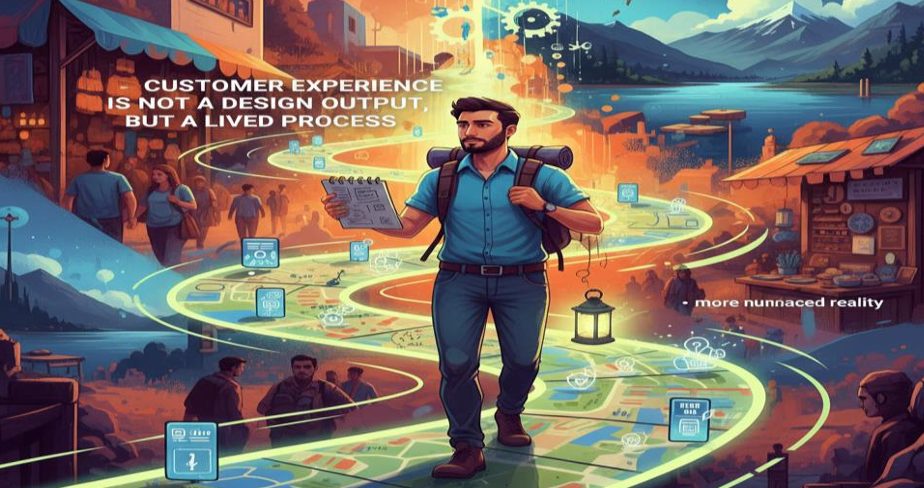
Customer Experience as a Lived Process
In much of the CXM literature, customer experience is framed as something that can be designed, mapped, and optimized. Innovation in tourism is often perceived through the lens of “Creative Destruction” (a nod to Schumpeterian theory), yet my doctoral research suggests a more nuanced reality. In tourism entrepreneurship, CX is rarely the result of a predefined strategy. Instead, it is shaped through trial, adjustment, and learning mirroring the entrepreneur’s own professional trajectory.
Tourism as a Living Laboratory for CXM
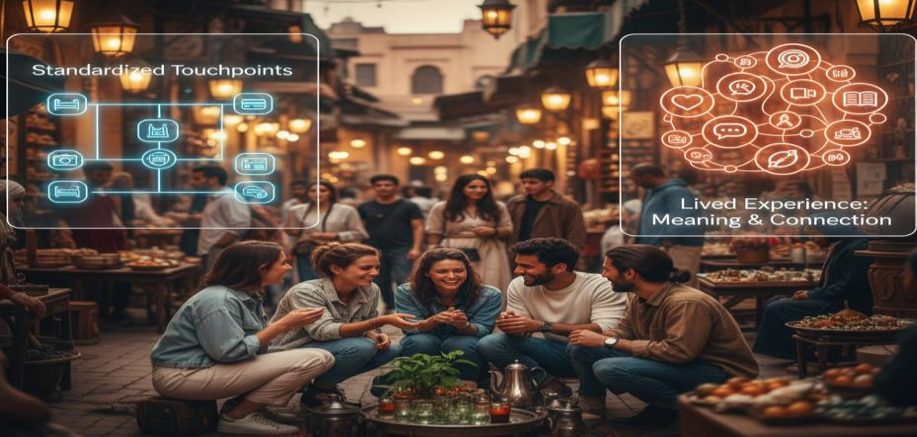
Entrepreneurs do not merely “design” an experience, they live it. Tourism offers a unique empirical ground for CXM analysis because experiences are not confined to isolated touchpoints. They unfold across time, space, and social interaction. In regions such as Marrakech–Safi, innovative tourism entrepreneurs reconstruct customer experience around meaning, authenticity, and human connection rather than standardized service scripts.
Innovation and CX: A Circular Relationship
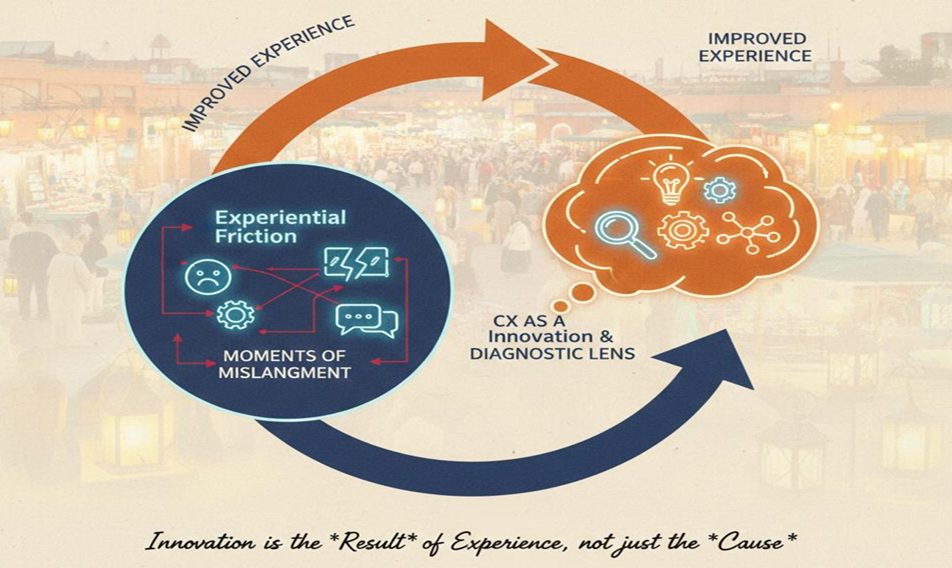
One of the central findings of my research is the circular relationship between innovation and customer experience (CX). Innovation does not always precede experience; very often, it is the result of experiential friction moments where expectations, emotions, or values are misaligned. CXM, in this sense, becomes a diagnostic lens rather than a performance metric. Tourism Innovation.
My findings indicate that innovation is frequently born from “Customer Dissonance”. When a traveler’s expectations clash with reality, the agile entrepreneur doesn’t just fix a problem but they innovate a new process. This is the heart of CXM: transforming a friction point into a “Moment of Truth”. In the Marrakech-Safi region, this has led to the rise of slow tourism and micro-experiences innovations triggered from customers’ desire to live an authentic and spontaneous experience.
What CXM Should Learn from Entrepreneurial Trajectories?
If CXM is to remain relevant in entrepreneurial contexts, it must move beyond standardized models. Based on my research, three shifts are essential: prioritizing narratives over scores, understanding entrepreneurial trajectories rather than static personas, and accepting imperfection as a source of memorability and innovation. Standard CXM often relies on static personas. However, the complexity of tourism entrepreneurship requires a more dynamic approach. We must move toward “Life-Path Mapping.”
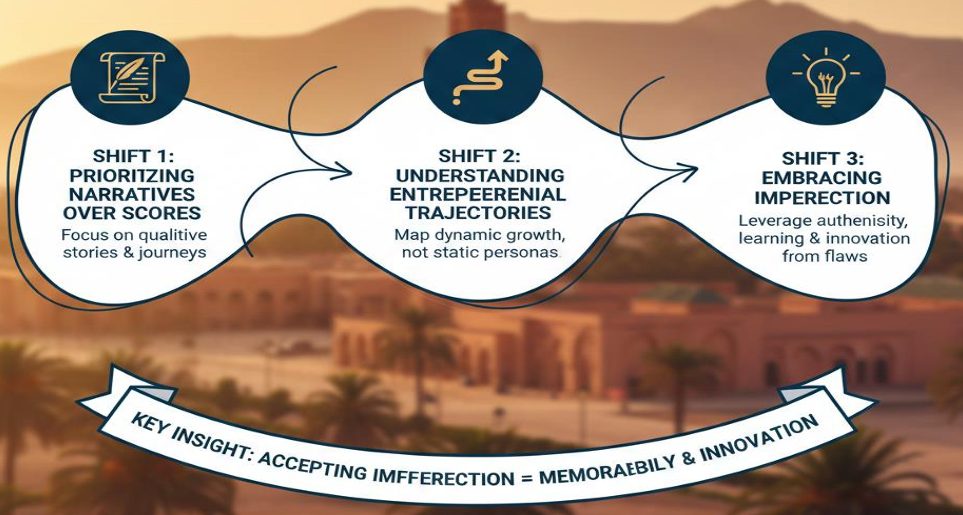
By understanding the entrepreneur’s trajectory, we can predict the quality of the customer experience. A “resilient” trajectory (one that has overcome local systemic challenges) almost always translates into a high-empathy customer experience. The lesson for CXM students is clear: behind-the-scenes aspects of the company or business (the entrepreneur’s struggle) play a key role in shaping brand image (customer satisfaction). Tourism Innovation.
Conclusion
The Marrakech-Safi region is more than a destination, it is a laboratory for the future of CXM. Viewing customer experience as an evolving trajectory allows us to rethink both CX and innovation. For students, researchers, and practitioners, tourism entrepreneurship demonstrates that experience, innovation, and identity are continuously co-constructed. The challenge lies in no longer viewing ‘experience’ as a mere marketing product, but rather as an outcome of entrepreneurship.
“CX is not what is delivered it is what is lived”
About tourism Innovation in hotel industry you can read here: Akceptacja robotów w usługach hotelowych – Henn-na Hotel, Japan